The leaders’ organisations need have stood where risk originates, seen it across many worlds and carried it into the boardroom.
Beyond ownership: the multi-dimensional risk leader
Large organisations have long struggled to say who owns risk, and most have only recently improved. Saying who truly understands it is another matter.
A person can chair the risk committee without ever standing where a loss starts to form or a critical asset fails. That gap stays hidden until the organisation suddenly needs answers its reports never provided.
Part of the problem is delegation. Risk is handed down, sideways and outwards until nobody holds it: the business assumes the risk function is watching, and the risk function assumes the business owns the control.
In Australian financial services, regulation leaves little room for that ambiguity. Under the Financial Accountability Regime (FAR), administered jointly by APRA and ASIC, banks, insurers and superannuation trustees must name accountable persons and document their responsibilities. Among other things, those individuals must take reasonable steps to prevent material breaches of their entity's core compliance obligations. Tasks can be delegated; accountability cannot.
Tasks can be delegated; accountability cannot."
Genuine risk leadership rests on three kinds of experience rarely found in one person: having managed risk at its origin, having assessed risk and recommended solutions across a diverse portfolio of clients and industries, across multiple jurisdictions and regulatory regimes, and having governed risk from the boardroom. Each alone makes a specialist. Combined, they make a risk leader who connects what happens on the ground with patterns seen elsewhere, translates both into choices a board can make, and brings people to act on them.
Leadership at the source
Risk does not start in a register but in everyday decisions: a policy stretched to meet a deadline, a workaround that becomes routine, or a new product or initiative launched before its risks are fully understood. By the time it surfaces on a heat map, or as a risk appetite threshold breach, or in the next audit cycle, it has been simplified, averaged and often overtaken by events.
Leaders who have managed risk at the source ask different questions. Not "Is this risk rated correctly, and does it fit within our standard risk matrix?" but "Who makes this decision, what motivates them, under what pressure, and with what information?"
Teams share bad news early with leaders who have stood where they stand, made the same trade-offs under pressure and lived with the consequences. That signal comes less from policies, procedures and escalation mechanisms than from an embedded risk culture, where people speak up because they trust the response, not because documented processes, put in place to satisfy compliance, ask them to.
Seeing risk from many angles
Leaders who have assessed risk and recommended solutions across diverse clients, industries and geographies, and from different sides of the table, see risk from many angles. Patterns repeat: a handover breakdown between two teams in one organisation looks remarkably like a control gap in another. The surface details differ; the mechanics of concentration, complacency and misaligned incentives do not. Yet a control that works in one jurisdiction may not translate to another.
Culture matters just as much: where challenging a senior colleague is unthinkable, bad news travels quietly or not at all, and a well-designed escalation process sits unused. Leaders who have worked across borders stop exporting templates, because they know one size does not fit all; force it, and the organisation ends up battling a strategy misaligned with local realities and regulatory obligations. A true risk leader understands the deep human behaviours and cultural norms that shape risk in each place, more deeply than a list of material risks in an annual strategy plan or a risk management framework could capture.
Risk leadership is earned judgement, not an appointment."
The view from the boardroom
Leaders who have sat at the boardroom table know its job is not to eliminate risk but to choose it, deliberately and within what the organisation can absorb.
Too often, risk reporting is tabled for information or awareness, noted and filed. Experienced leaders treat it as an input to decisions, interrogating the data behind the ratings: how it was gathered, what it leaves out, and whether a trend is real. They ask what decision the board needs to make, and respect it enough to challenge comfortable consensus.
Why every dimension matters now
Today's risks are connected, fast, borderless and scrutinised: a single cyber incident can become a regulatory investigation and a reputational crisis within hours. No one anticipates everything. Leaders who have managed risk at its source, seen it across many environments and governed it from the boardroom recognise it sooner and respond faster.
Why risk leadership is more than an appointment
Risk leadership is earned judgement, not an appointment. Leaders who have stood where risk originates, seen it from many angles, understood it through a global lens and carried it into the boardroom give boards clarity rather than comfort. That is the difference between an organisation lulled by volumes of reporting, then surprised by its risks, and one ready to act on them.
Further reading
- APRA (apra.gov.au): Financial Accountability Regime guidance (updated November 2026); CPS 220 Risk Management; CPS 230 Operational Risk Management; Information Paper: Risk Culture (2016); Self-assessments of governance, accountability and culture (2019).
- ASIC, Financial Accountability Regime.
- Financial Stability Board: A Framework for Assessing Risk Culture (2014); Principles for an Effective Risk Appetite Framework (2013).
- Heidrick & Struggles, Financial services: Ensuring the next generation of risk leaders is ready.Author, Title, Publication, date
About the author
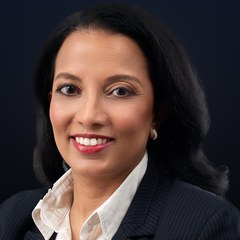
Ishara Saldin is an investor, global speaker and risk and transaction strategist with twenty-five years of experience as a corporate executive, board director and entrepreneur. She has delivered complex cross border outcomes across twenty-one countries and works with a select group of clients around the world.
© 2026 Ishara Saldin. All rights reserved. No part of this article may be reproduced, republished, distributed or commercially used without prior written permission from the copyright owner, except as permitted by applicable law.